No products in the cart.

Magnesium for Sleep: The Wellness Trend Worth Questioning
MODAFIRMA / WELLNESS & MODERN LIVING
Better sleep has become the ultimate modern luxury. Between demanding careers, family responsibilities and the pressure to be constantly available, a genuinely restorative night can feel harder to secure than another promotion. So it is hardly surprising that magnesium has found its way into evening routines, wellness conversations and bedside cabinets.
Magnesium glycinate, in particular, has become a popular choice among people looking for a calmer night. Yet the science is considerably less definitive than the marketing. Some trials suggest small improvements in certain sleep outcomes; others find little difference from placebo. Before adding another supplement to your routine, it is worth separating what we know from what we hope.
Why is everyone talking about magnesium?
Magnesium is an essential mineral involved in hundreds of processes throughout the body, including nerve and muscle function. Its role in neurological signalling provides a plausible reason to investigate sleep effects, but a biological explanation is not the same as proof that a supplement will help an otherwise healthy adult sleep better.
For ambitious women, the appeal is understandable: a simple evening capsule sounds easier than rebuilding an entire sleep routine. The important question, however, is whether that convenience translates into a meaningful, measurable benefit.
What the research actually says
A 2026 systematic review of 12 randomised controlled trials found mixed results. Some studies reported improvements in self-rated sleep quality, insomnia symptoms or daytime functioning, while others found no clear benefit on overall sleep quality or objective measurements. The reviewers rated the evidence low to very low certainty because studies differed in participants, doses, formulations, duration and methods.
Read the 2026 systematic review in the Journal of Dietary Supplements for the underlying research.
An earlier review focused on older adults suggested that participants taking magnesium fell asleep about 17 minutes faster on average, but the included trials were small and at risk of bias; improvements in total sleep time were not statistically convincing. That is an interesting signal, not a guarantee of better sleep for everyone.
Explore the systematic review and meta-analysis in older adults.
Clinical guidance remains cautious. The 2025 US Department of Veterans Affairs and Department of Defense insomnia guideline found insufficient evidence to recommend magnesium either for or against chronic insomnia. The message is not that magnesium can never help, but that its effectiveness has not been reliably established.
See the 2025 clinical practice guideline.
Magnesium glycinate: is it the best form for sleep?
Magnesium comes in several forms, including glycinate or bisglycinate, citrate and oxide. Glycinate is frequently marketed as a sleep-friendly option, but the studies are too varied to establish one formulation as definitively superior. Product names can also be confusing: the amount of elemental magnesium, rather than the total weight of the magnesium compound, is the useful figure to check on a label.
If you are comparing supplements, consider the elemental magnesium per serving, serving size, other ingredients, and whether the product suits your circumstances. A premium label does not make a product a clinically proven sleep treatment.
Two magnesium glycinate products to explore
The following are examples of magnesium glycinate supplements, not recommendations or evidence that either product improves sleep. Always confirm the current ingredients, serving instructions and suitability on the retailer’s product page.
Sports Research Magnesium Glycinate
Sports Research Magnesium Glycinate — product image supplied for MODAFIRMA.
Sports Research offers a chelated magnesium glycinate capsule. The supplied packaging identifies 90 veggie capsules and states 160 mg of magnesium per serving; check the retailer’s current listing for the exact serving size and label information.
View Sports Research Magnesium Glycinate on iHerb
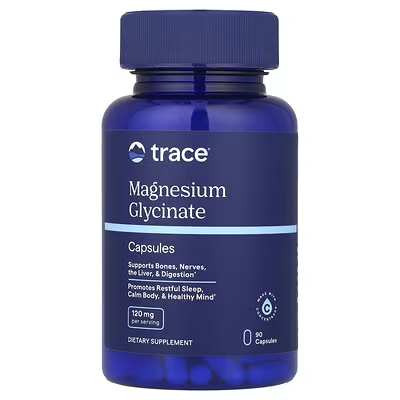
Trace Magnesium Glycinate
Trace Magnesium Glycinate — product image supplied for MODAFIRMA.
Trace offers a magnesium glycinate capsule supplement. The supplied image describes a 120 mg serving and a 180-capsule bottle, while the linked retailer listing is titled 90 capsules. Verify the exact pack size and serving information on the live product page before purchasing.


Sports Research Magnesium Glycinate — product image supplied for MODAFIRMA.
Sports Research offers a chelated magnesium glycinate capsule. The supplied packaging identifies 90 veggie capsules and states 160 mg of magnesium per serving; check the retailer’s current listing for the exact serving size and label information.
Trace Magnesium Glycinate
Trace Magnesium Glycinate — product image supplied for MODAFIRMA.
Trace offers a magnesium glycinate capsule supplement. The supplied image describes a 120 mg serving and a 180-capsule bottle, while the linked retailer listing is titled 90 capsules. Verify the exact pack size and serving information on the live product page before purchasing.
Metagenics Magnesium Glycinate
Metagenics Magnesium Glycinate — product image supplied for MODAFIRMA.
Metagenics Magnesium Glycinate is another formulation readers may encounter when comparing supplements. The supplied bottle is labelled as 240 tablets and describes support for muscle and nervous-system health. As with other magnesium supplements, the label does not establish that it treats insomnia or reliably improves sleep. Check elemental magnesium content, serving size and suitability before use.
Shopping link: A Metagenics-specific product URL has not yet been supplied. The Trace Magnesium Glycinate iHerb link provided with this image leads to a different brand, so it has not been assigned to Metagenics.

Before buying another supplement, consider the basics
Magnesium is also found naturally in leafy green vegetables, nuts, seeds, beans and whole grains. For many people, reviewing overall dietary intake is a more sensible starting point than assuming a sleep problem must be solved with a capsule. A regular wake-up time, a cool and comfortable bedroom, and attention to evening caffeine and screen habits can be useful foundations for better sleep.
Supplements are not risk-free. Excess supplemental magnesium can cause diarrhoea, nausea and abdominal cramping; very high intakes can be dangerous, particularly with impaired kidney function. Magnesium can also interfere with the absorption of certain medicines. If you take regular medication, have kidney disease, are pregnant, or are unsure whether supplementation is appropriate, speak to a qualified clinician or pharmacist first.
For further context, read the US National Center for Complementary and Integrative Health overview and Harvard Health’s discussion of magnesium and melatonin.
The MODAFIRMA perspective
A more intentional wellness routine is not necessarily a more complicated one. Magnesium may be worth discussing with a professional when intake is inadequate or there is another reason to consider supplementation, but it should not be presented as a universal solution to poor sleep. Persistent insomnia deserves proper assessment; established treatments, including cognitive behavioural therapy for insomnia, should not be displaced by supplement trends.
Perhaps the most sophisticated wellness choice is to be selective: question the claims, understand the evidence and invest in habits that make your everyday life genuinely better. Rest is not a reward for finishing everything on your list. It is part of what makes doing meaningful things sustainable.
Frequently asked questions
Does magnesium glycinate help you sleep?
Possibly for some people, but trials are inconsistent and there is no reliable evidence that it improves sleep for everyone.
Which magnesium is best for sleep?
No formulation has been established as the best for sleep. Studies vary too much to support a definitive comparison.
Should I take magnesium every night?
That depends on dietary intake, health, medication and the dose. Seek personalised advice rather than treating a supplement as a long-term solution to unexplained sleep difficulties.
Sources and further reading
2026 systematic review — Journal of Dietary Supplements
Older adults meta-analysis — PubMed Central
2025 VA/DoD insomnia guideline
Harvard Health — magnesium or melatonin
Editorial disclosure: Product links may be affiliate links. This article is for general information, not individual medical advice. Product details should be checked with the retailer before purchase.
A Note on Affiliate Links
Some articles on MODAFIRMA contain affiliate links. If you make a purchase through these links, we may earn a small commission at no additional cost to you. Our editorial content is independently curated, and we aim to feature brands, products and experiences that reflect our commitment to quality, style and considered living.
Enjoyed This Article? Join the MODAFIRMA Community.
Discover more on fashion, wealth, wellness, entrepreneurship and modern living. Subscribe to our MODAFIRMA newsletter on Substack for curated edits, insightful features and fresh inspiration delivered directly to your inbox.
Style. Wealth. Wellness. Modern Living.
For women creating lives of substance.